Why talent clusters: what ants taught me about turning one top performer into four
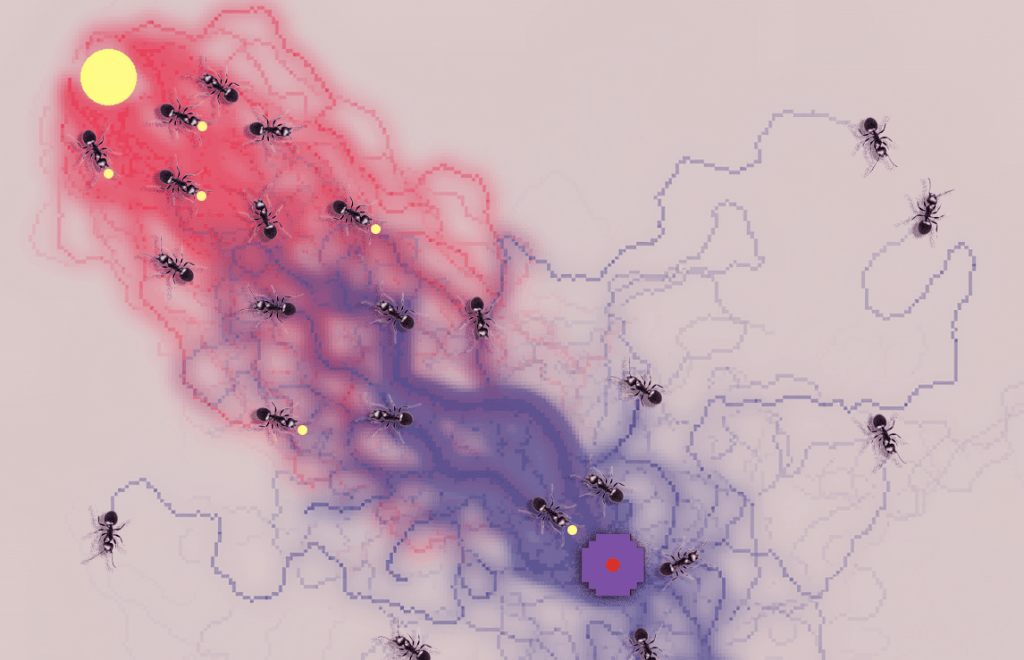
I was watching a simulation of ants foraging (yes, that is what I do in my spare time), when the first three words of a quote from Tony Robbins came to mind.
“Success leaves clues. People who succeed at the highest level are not lucky; they’re doing something differently than everyone else does”.
From my years of observation, people who succeed are usually surrounded by other people that have succeeded in a very similar way. The distribution of talent isn’t spread evenly throughout different organisations. Talent leads to more talent in close proximity. Why would that be? One might think that there are limited opportunities within each business, so talent would spread.
A lot of leaders understand this too, so they train their people on what has worked for their past high performers (the clues). That is necessary, but focusing on the clues misses the point.
A leader’s job is managing how the clues get left.
By adopting a similar method I saw my business drastically transform. But before I had time to pat myself on the back, I learnt that ants were the masters of this strategy.
Many ant species forage for food in a highly effective, self-organising way. Biologists call this kind of coordination ‘stigmergy’: individuals guide each other through the traces they leave behind. But the ants don’t write it down, take orders or have little training sessions. They use some very basic principles and leave their version of a clue, called pheromones. These were the methods I unconsciously applied in my business.
Story: Time to $1M GCI
About 8 years ago, our residential real estate business had just changed franchise brands. A big part of why we changed was to understand how to create a high performing sales team like others in the new brand. When our first team finally hit the number, we shared everything that made it possible. Then, it happened a lot faster.
Speaking to many top performers in person put us on the trail. We could see the details, ask clarifying questions and notice patterns over many examples.
The path to success was a lot of failing, then succeeding. We failed to apply the methods correctly. We failed by applying tactics that didn’t work in our market. We failed to realise that after we saw results with the new way, the existing agents would fight to keep their current practices, even though those practices produced few results. One sales team remained, led by my business partner who had been selling for four years. Another four years after the change, with immense skill and effort on his part, they passed $1M Gross Commission Income (GCI).
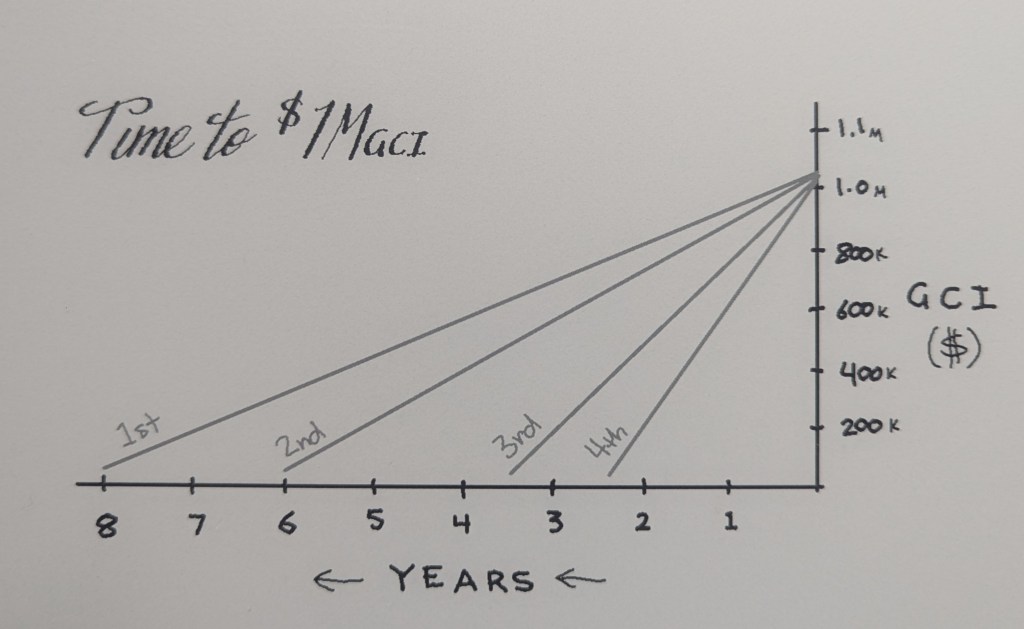
But now the question was, could we replicate this high performance in others, without losing what we had gained? It turned out that three new lead agents led their teams to over $1M without the others dropping. The biggest surprise was that the time to $1M happened faster and faster. What took my partner eight years shortened to six, then to three and the most recent in just over two years. House price increases helped those numbers a little but the later agents went into new suburbs with no data or past sales.
Modelling the foraging of ants
Ants foraging for food is a great way to model a simple self-organising system. I saw this abstracted model of nature simulate in one minute, what had happened in my business over eight years. Although not a perfect match, it helped me understand the essential system variables that produced our success.
Changing the variables changes the total time to collect all available food. The range could be thought of as totally random to highly effective. Random is all the ants just wandering around until they collect all the food [~1,460 ticks]. The highly effective approach is the shortest time to source all the food, by using strong clear paths that the ants go down [~680 ticks]. The optimal solution after all the testing is: more ants, a little diffusion, very slow evaporation, and neither of the last two at zero.
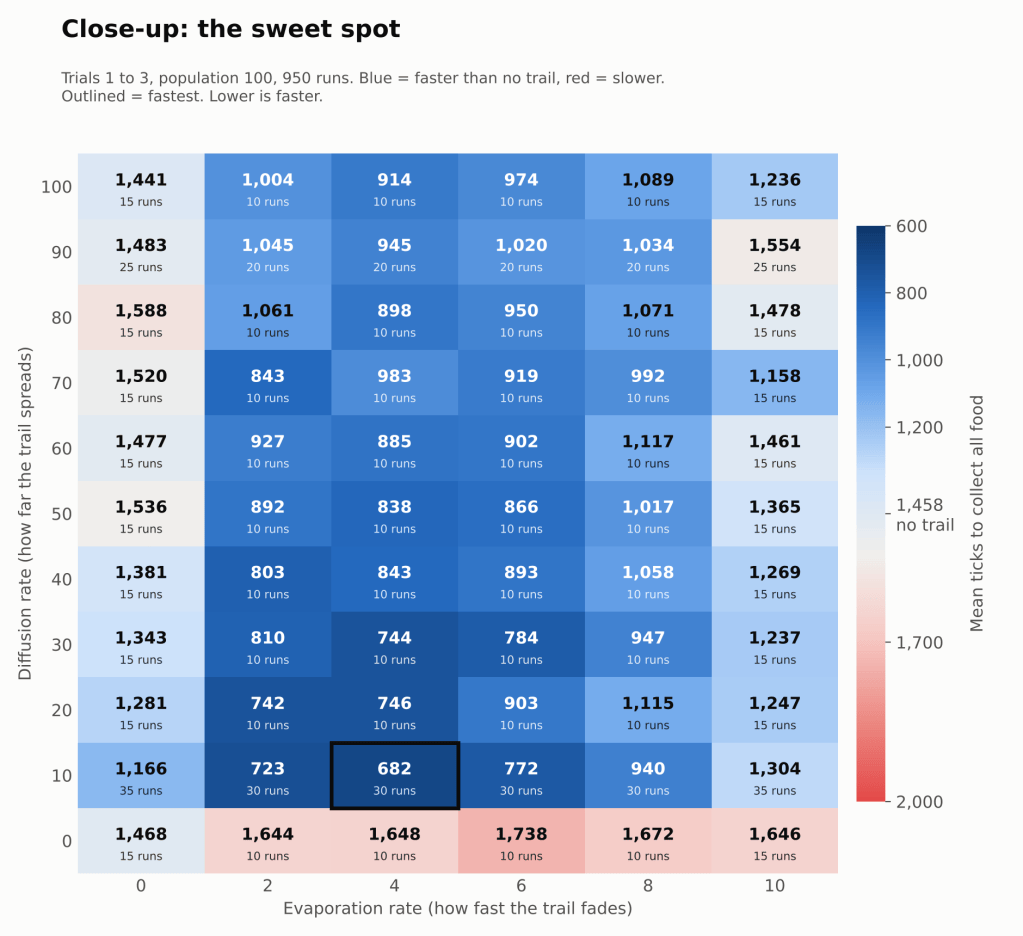
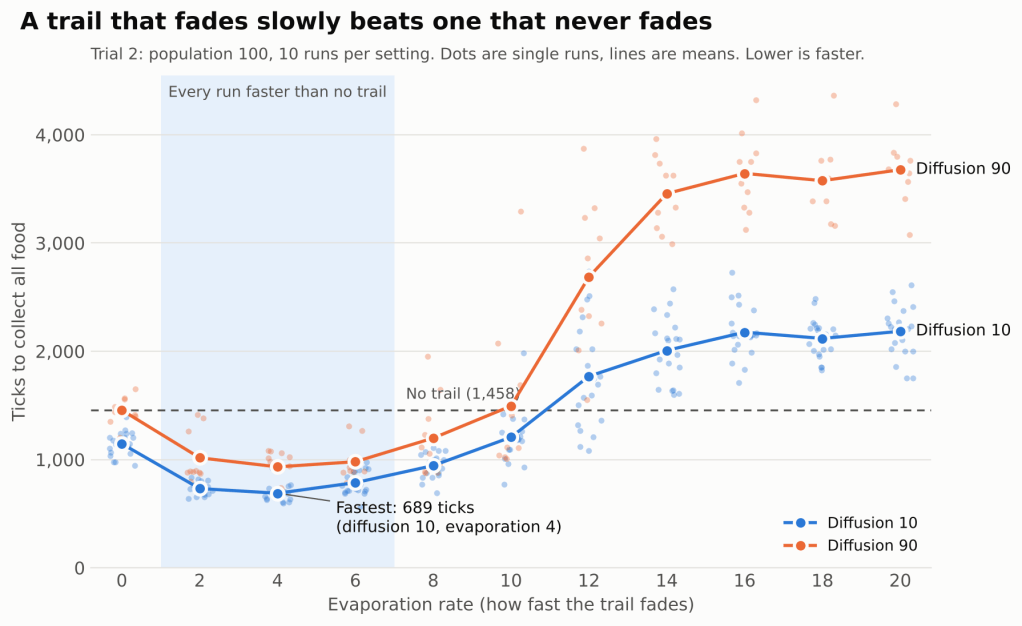
Even though this is a useful model, it is nevertheless oversimplified for both ant colonies and a team representation. Examples of elements not included are: local competition, environmental shifts and population dynamics. The biggest flaw to acknowledge is that people are not ants. Shocking, but it’s true.
Lessons in self-organisation from agents and ants
The food or GCI is the outcome, not the intelligence. The pheromone trails are the collective memory of the colony. Trails are decentralised and dynamic as they adapt over time. Likewise, our success lived in what agents did each day, the commission was the byproduct. Over time, as success is reinforced, top performer rankings naturally shift as other team members continually refine and establish more efficient paths. The things that matter in both my story and the simulation are: population, diffusion, evaporation and fractals.
Population.
Because random exploration is the starting point, the higher the ant population is, the sooner someone finds the food. And the more ants there are ongoing, the more the correct path gets reinforced. This is an advantage to larger organisations but comes at a financial and distribution cost not accounted for in this model. In the model, doubling the colony from 100 to 200 ants only made it 24% faster. I found in my business that throwing a lot of random trials wasn’t cost effective. The right mix was getting a small number of people to create an initial path to success, then increasing the population quicker so others could follow.
Evaporation.
Evaporation represents the strength of the signal through time. It is the variable that most easily turns a trail from help into harm. Fade it a little too fast and the colony does worse than having no trail at all. For business, the path needs to be an adaptable documented system or training that updates continuously over time. If the secrets of success live inside someone’s head and are vague, the trail will evaporate fast. The path does need to evaporate eventually though. In the model, a trail that never faded barely beat random, and took 70% longer than one that faded slowly. In business, your old processes need to disappear at some stage. So don’t etch them in stone.
Diffusion.
Spreading the signal over space diffuses the trail. Narrow enough to point somewhere but wide enough to find. My lesson is that top performers should share close to where they work in many different formats. Close but clear. If everyone is spreading their signals too wide, people get overwhelmed and don’t know what way to go.

Fractals.
Notice that the pattern in my story was fractal. My business followed the success within the franchise. The lead agents followed the success within the office. Individual agents followed the success within the team. The same pattern, nested inside one another.
Bringing it back to the nest
Tony Robbins is saying that you (the ant) should follow the scent of pheromones for a better chance to reach success, not the crowd. I agree, you could smell better or move quicker for more individual success. But I’m thinking about the colony perspective, the leader’s responsibility for the collective success of the organisation. The job of encouraging stigmergy.
In the model, a well-curated trail collected the food twice as fast as no trail. A confusing trail was slower than none at all.
I now ask myself these questions.
- Population: Can I experiment with many trials from the beginning? Or should I put a lot of energy into one, then quickly increase the population?
- Paths: As the leader, can I ensure that clues/pheromones are continuously laid down? Both through time and over different mediums.
- Fractals: Is my organisation structure fractal? Is every layer of the organisation able to follow the path of many top performers?
The self-organising biological strategy is an example of indirect leadership. It’s how central governance can influence a complex system and succeed without force or attempting to eliminate all uncertainty.
- Wilensky, U. (1997). NetLogo Ants model. http://ccl.northwestern.edu/netlogo/models/Ants. Center for Connected Learning and Computer-Based Modelling, Northwestern University, Evanston, IL.

Leave a Reply